
Hardware Selection for Automation Projects: A Plain-Language Buyer's Guide
October 24, 2026
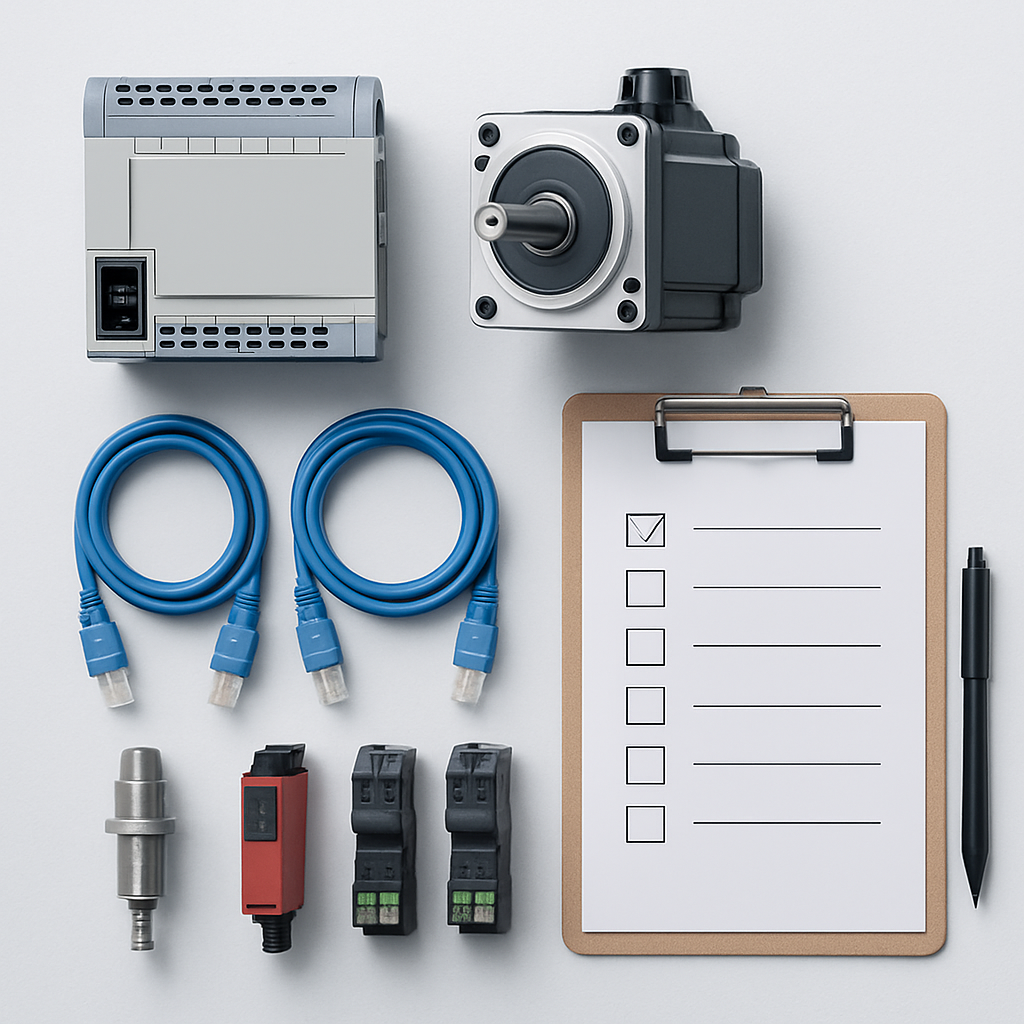 Hardware is the largest capital line item in most automation projects, yet the decision criteria rarely get the attention they deserve. This guide walks procurement and operations teams through environment, throughput, integration complexity, and total cost of ownership before a purchase order is raised.
Why Hardware Gets Underexplained in Automation Planning
Hardware is typically the largest single capital line item in an automation project, yet most content aimed at business buyers skips past it or treats it as an afterthought. Any serious automation hardware selection guide should address the decision before a purchase order is raised, not after a system integrator has already recommended their preferred vendor. Getting this right early shapes everything downstream: cycle times, maintenance schedules, software compatibility, and the total cost over the asset's working life.
Hardware is also one modality among many. A process step might be solved better by a software workflow, a controlled document, a vision system, or a combination of all three. Choosing the right physical equipment only makes sense once you know which steps genuinely require it.
Start With the Process, Not the Product
Before evaluating any piece of equipment, map the specific process step the hardware is meant to handle. Ask what the step does today, what its failure modes are, and what throughput it needs to sustain. A conveyor line running 400 units per hour has different constraints than a pick-and-place cell handling 40 fragile components per hour.
This mapping also surfaces whether hardware is the right modality at all. If a bottleneck is caused by slow data entry rather than physical movement, a software integration may clear it faster and at a fraction of the capital cost. Hardware purchases that bypass this question tend to solve the wrong problem at high expense.
Define the Environment First
Environmental conditions determine which equipment classes are even eligible. Consider:
- Temperature and humidity ranges, industrial enclosures rated for a climate-controlled warehouse are not the same as those rated for a foundry or cold-storage facility.
- Dust, debris, and wash-down requirements, an IP rating governs how well a device resists particulates and moisture. IP54 handles splashing water; IP69K handles high-pressure steam cleaning.
- Hazardous area classification, if flammable gases or combustible dust are present, only ATEX- or UL-certified equipment is appropriate.
- Vibration and shock loads, equipment mounted near heavy presses or stamping machines needs vibration ratings that standard industrial hardware may not meet.
Skipping this step is the single most common cause of premature hardware failure and unplanned downtime. A device that performs well in a showroom demonstration may be unsuitable for your specific floor.
Throughput and Duty Cycle
Throughput is the volume of work a system must complete per unit of time. Duty cycle is how much of that time the hardware operates at or near its rated capacity. Both figures need to be honest estimates, not peak numbers pulled from a best-case scenario.
A robot arm rated for 10 kg payload operating at 100 percent duty cycle around the clock will wear differently than the same arm running two eight-hour shifts with a scheduled maintenance window. Manufacturers publish duty cycle ratings; match them to your actual operating model, not your theoretical one.
Build In a Throughput Margin
A useful rule: size hardware to handle 120 to 130 percent of your current peak demand. Production volumes grow. Process changes happen. Equipment that runs permanently at its rated ceiling leaves no room for variation and ages faster. That buffer is cheaper to buy upfront than a mid-cycle replacement.
Integration Complexity and the Full Modality Stack
Hardware rarely operates alone. A robotic cell typically connects to a programmable logic controller, which connects to a supervisory system, which feeds data to an ERP or MES platform. Each handoff introduces integration complexity. The more proprietary the hardware, the narrower the field of compatible software and the higher the cost when you need to change either side.
Before committing to a platform, ask the supplier three questions:
- What communication protocols does this hardware support natively? Look for OPC-UA, MQTT, or Modbus/TCP as baseline industrial standards.
- What does a firmware or software update require in terms of downtime and specialist labor?
- Who owns the data the device generates, and in what format is it exported?
These questions reveal lock-in risk. A system that generates proprietary data formats and requires vendor-only service contracts will cost significantly more over its life than its sticker price suggests.
Fixturing and Physical Infrastructure
The hardware itself is only part of the physical story. Fixturing, safety guarding, cable management, power conditioning, and compressed air infrastructure are real costs that often do not appear in early-stage quotes. A thorough site survey before procurement closes these gaps. If your integrator or equipment supplier has not asked for a site visit before quoting, treat that as a signal to ask more questions.
Total Cost of Ownership: The Number That Actually Matters
Purchase price is a starting point, not a decision criterion. Total cost of ownership (TCO) over a realistic asset life (typically five to ten years for industrial hardware) includes:
- Installation, commissioning, and training
- Planned maintenance, consumables, and spare parts
- Unplanned downtime and its cost per hour to your operation
- Software licensing tied to the hardware
- End-of-life replacement or upgrade costs
Two systems with similar purchase prices can produce very different TCO figures depending on mean time between failures, parts availability, and the labor required to service them. Request maintenance schedules and mean time to repair data from suppliers, and if they cannot provide it, ask why.
Financing and CapEx vs. OpEx Framing
Some hardware suppliers now offer equipment-as-a-service arrangements that shift the cost from capital expenditure to operating expenditure. This can be useful when budget cycles favor OpEx, but it introduces ongoing contractual obligations and may reduce flexibility to swap platforms later. Neither structure is universally better; the right answer depends on your balance sheet priorities and how confident you are that the chosen hardware will remain suitable for the full contract term.
A Tiered Way to Think About Hardware Options
Not every automation project needs the most capable hardware available. A tiered framing helps match investment to need:
- Effective tier: Off-the-shelf industrial components with broad compatibility, strong parts availability, and a large service network. Slower in some specialized applications but easier to maintain and replace.
- Better tier: Purpose-built equipment for the application category, offering tighter tolerances or higher throughput than commodity hardware, with a mid-range support ecosystem.
- Ideal tier: High-precision or custom-configured systems for applications where standard components cannot meet the spec. Higher capital cost, longer lead times, and narrower service options, justified only when the process genuinely requires it.
Most projects land in the first or second tier. Choosing the ideal tier for a process that the effective tier would handle is a common and expensive mistake.
When to Bring in Outside Evaluation
Hardware selection benefits from engineering analysis that weighs all the modalities for each process step, not just the equipment being sold by the firm quoting the job. An independent evaluation considers whether hardware is the right answer for that step at all, which hardware class fits the environment and throughput requirements, and what the realistic TCO looks like against alternatives.
Intellimate AI provides this kind of solution engineering across the full modality stack, including hardware, robotics, vision systems, machine learning, software, and controlled documents, so that each process step gets the option that fits its economics, not the one that was easiest to quote.
Start by listing the process steps in your operation that carry the highest cost or risk, then bring that list to your evaluation before any equipment decision is made.
Tags